
If you have been looking at awnings for your Melbourne home, you already know the first problem: there are dozens of types, and most websites show you beautiful installation photos without explaining which one actually suits your situation.
Melbourne’s climate makes this decision more specific than it sounds. The western suburbs bake in the afternoon sun. Bayside suburbs like Brighton and Gardenvale deal with sea breeze and UV year-round. Eastern suburbs like Hawthorn, Kew, and Camberwell have established tree canopies that change the shading equation entirely. Some homeowners also compare awnings with other external window shading options (roller shutters) that block heat more aggressively but can change the overall look of a home. Understanding the difference between flexible shading systems and fixed barrier-style solutions helps you choose what suits your space best.
This guide covers the main awning types available in Melbourne in 2026, what each one does well, where each one falls short, and the practical questions that help you choose between them. Prices, suburb-specific considerations, and motorisation options are all covered.
Why Melbourne Homes Need Awnings — The Climate Case
You cannot see the sunshine, but in Melbourne you can witness long sunny hours. Summer temperatures regularly exceed 35°C, and west-facing windows can push interior temperatures 8 to 12°C higher than the ambient temperature outside during peak afternoon heat.
An awning on a west or north-facing window or door reduces the amount of solar radiation (direct sunlight energy) entering the building before it reaches the glass. This is far more effective than internal blinds, which trap heat between the glass and the blind before it can radiate back out. Studies by the Australian Government’s Department of Climate Change and Energy show that external shading on windows can reduce summer cooling energy use by 25 to 40%.
Beyond heat reduction, Melbourne awnings also protect outdoor entertaining areas from UV — important given Australia’s highest skin cancer rate in the world — extend outdoor living seasons through protection from light rain, and provide privacy on streetside windows that face busy roads or close neighbours.
The climate case is clear. The question is which awning type achieves those goals on your specific home. And that answer changes depending on the structure, the orientation, and the suburb.
The Main Awning Types Available in Melbourne
Folding Arm Awnings — The Most Popular Choice
A folding arm awning extends horizontally outward from the wall on hinged, spring-loaded arms. When retracted, it folds flat against the building. When extended, it creates a shade canopy over the outdoor area below — typically a patio, deck, or alfresco dining area.
This is the most commonly installed awning type across Melbourne suburbs, including Richmond, Hawthorn, Camberwell, and Kew, where terraces, back decks, and alfresco areas are standard features of the housing stock. The arm mechanism allows the awning to be extended to varying degrees, giving control over the shade angle.
Key advantages: folds completely away when not in use (protecting the fabric from weather), can shade large areas (spans of 5 to 10 metres are common), and works with motorisation (Somfy, Becker, or Oztech motor systems) for one-touch operation.
Key limitation: folding arm awnings should not be left extended in strong wind. Most are designed for light to moderate conditions only. If your Melbourne property is in an exposed location — hilltop, coastal, or open paddock fringe — a cassette-style awning that fully encloses the fabric when retracted offers better fabric protection.
Drop Arm Awnings — For Windows and Privacy
A drop arm awning pivots downward from a fixed point above the window rather than extending horizontally. The fabric hangs at an angle, shading the window from above while maintaining airflow and visibility. This type is common on windows that face the street — particularly in suburbs like Thornbury, Eltham, and Greensborough, where privacy from passing foot traffic is a consideration alongside sun control.
Drop arm awnings are also well-suited to smaller windows where a full folding arm system would be oversized. They extend quickly and are available in manual or motorised operation.
Canopy Awnings — Fixed Shade That Never Moves
A canopy awning is a fixed structure — typically a straight or curved metal frame with a fabric or polycarbonate cover — mounted above a door or window. Unlike folding arm or drop arm awnings, canopy awnings do not retract. They provide permanent, weather-proof cover year-round.
Canopy awnings are suited to entrances, front doors, and café or commercial shopfronts where permanent overhead cover is needed regardless of the weather. They are common in inner Melbourne suburbs and commercial strips across Richmond, Camberwell, and Malvern. Lifestyle Awnings offers Dutch Hood, French, Bow, Spring Wedge, and Fixed Frame Wedge canopy styles to suit both heritage and contemporary architecture.
Motorised Awnings — The Growing Standard
Motorisation is available on most folding arm and drop arm awning systems. A motorised awning extends and retracts at the press of a button — or automatically via a wind or sun sensor that detects when conditions change and retracts the awning without manual intervention.
In Melbourne’s changeable weather, where conditions can shift from still heat to gusty southerly change in under an hour, a wind-sensor motorised awning offers real practical value — not just convenience. Lifestyle Awnings installs Somfy, Becker, Alpha, and Linx motor systems. These are European-manufactured systems with proven reliability and app or remote integration for smart home compatibility.
Motorised awnings are increasingly standard in new Melbourne homes and renovations across Boronia, Bayswater, Vermont, and the outer eastern suburbs, where larger homes have bigger alfresco areas to shade.
Retractable Awnings — Flexibility Above All
A retractable awning is any awning that can be extended and retracted, which includes most folding arm awnings. The term is sometimes used to distinguish retractable systems from fixed canopy structures. The key decision point is whether you want a system that can be put away completely (retractable) or one that provides permanent cover (fixed canopy).
For most Melbourne homes, a retractable folding arm awning provides the best balance of coverage, flexibility, and aesthetics. For commercial applications — cafés, restaurants, and retail strips across inner Melbourne — a fixed canopy or pergola shade system is more appropriate because it provides year-round cover regardless of weather.
| The right awning is not the most impressive one. It is the one that solves your specific problem — on your specific home, facing your specific direction, in your specific suburb. |
Why Awnings Are the Most Practical Outdoor Shade Solution in Melbourne
External window shading plays a major role in reducing indoor heat, especially during Melbourne’s peak summer months. Among all outdoor shade solutions Melbourne homeowners consider, awnings offer one key advantage — flexibility. Unlike fixed structures, retractable awnings allow you to control sunlight, airflow, and coverage throughout the day. This makes them ideal for patios, alfresco areas, and windows where conditions change quickly.
For homeowners looking for a balance between comfort, energy efficiency, and design, awnings remain one of the most practical and cost-effective upgrades available.
Choosing by Home Orientation — The Melbourne-Specific Guide
| Window/Door Orientation | Heat Challenge | Best Awning Type | Notes |
| North-facing | Consistent overhead sun, year-round | Folding arm — extend to filter midday sun | Adjustable extension angle suits changing sun angle through seasons |
| West-facing | Intense afternoon summer heat from 2PM to sunset | Folding arm or drop arm — full extension in summer | This is Melbourne’s most problematic orientation — prioritise maximum coverage |
| East-facing | Morning sun — less intense but still significant in summer | Drop arm or smaller folding arm system | Morning sun is milder; drop arm suits windows well here |
| South-facing | Minimal direct sun; wind and rain exposure | Fixed canopy awning — weather protection priority | Shelter from cold and rain more important than sun control[I1] |
| Melbourne Suburb Tip In Bayside suburbs like Brighton and Gardenvale, UV intensity is higher year-round due to reflection off water surfaces. Awning fabric with a high UV-blocking rating (UPF 50+ where possible) is worth specifying. In eastern suburbs with mature tree cover — Kew, Camberwell, Glen Iris — natural shade can reduce the awning coverage required and allow a smaller or lighter system.[I1] |
What Does an Awning Cost in Melbourne in 2026?
Awning prices in Melbourne vary based on width, projection depth, fabric quality, and motorisation. A basic manual folding arm awning for a standard patio starts at around $800 to $1,200 installed. A full-width motorised folding arm awning with a cassette housing and Somfy motor system for a large alfresco ranges from $3,000 to $6,000 or more, depending on size.
These are installed prices — supply only will be less, but installation is recommended for all motorised systems and any awning mounted higher than standard wall height.
For commercial awnings Melbourne businesses install — cafés, restaurants, retail shopfronts — fixed canopy and café blind systems start higher because of the structural requirements and the need for year-round performance under public use conditions.
| Awning Type | Typical Installed Price (AUD) | Notes |
| Manual drop arm — single window | $600 to $900 | Entry-level shade for individual windows |
| Manual folding arm — patio up to 4m | $800 to $1,500 | Standard residential alfresco awning |
| Motorised folding arm — patio up to 4m | $1,800 to $3,000 | With remote motor — most popular upgrade |
| Motorised cassette folding arm — 5 to 7m | $3,000 to $5,500 | Full cassette housing protects fabric when retracted |
| Fixed canopy — standard shopfront | $2,000 to $5,000+ | Permanent structure; price varies widely by size and material[I1] |
Conclusion
Choosing awnings for your Melbourne home comes down to three questions: where does the sun hit your home hardest, how much flexibility do you want (fixed versus retractable), and what is your budget for convenience (manual versus motorised).
Get those three answers right. and the specific awning type follows naturally. Lifestyle Awnings installs across all Melbourne suburbs — from Richmond and Hawthorn in the inner east to Boronia, Bayswater, and Mooroolbark further out, and from Brighton and Gardenvale bayside to Greensborough and Eltham in the north east. Our showroom is at 134 Gardenvale Rd, Gardenvale, and the team provides free in-home consultations and quotes across Melbourne.
Frequently Asked Questions
Folding arm awnings are the most commonly installed awning type in Melbourne — particularly for alfresco areas, back decks, and patios. They provide large area coverage, retract fully when not in use, and are available with motorisation. Motorised folding arm awnings are the fastest-growing segment as Melbourne homeowners upgrade existing manual systems.
Installed awning prices in Melbourne start at around $600 to $900 for a basic manual drop arm window awning and range up to $5,500 or more for a large motorised cassette folding arm system. Prices vary by width, projection depth, fabric quality, and motorisation. Lifestyle Awnings provides free quotes for all Melbourne suburbs.
For most Melbourne homes, yes. Melbourne’s weather changes rapidly — a motorised awning with a wind sensor retracts automatically when conditions deteriorate, protecting the fabric from wind damage that would void a manual awning warranty. The convenience factor also means the awning is used more consistently, delivering more value over its lifespan.
Yes — significantly. External awnings on north and west-facing windows reduce solar heat gain by blocking direct sunlight before it reaches the glass. This is more effective than internal blinds, which trap heat between the glass and blind. Studies show external shading can reduce summer cooling energy use by 25 to 40%.
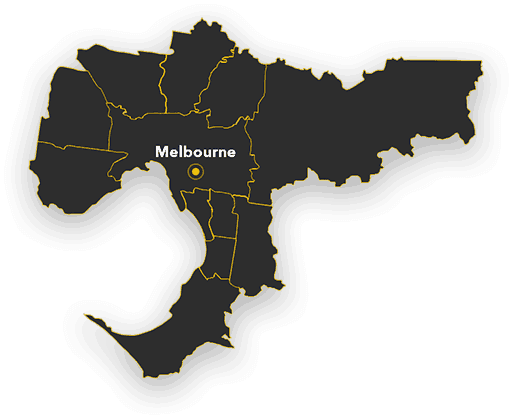
Lifestyle Awnings installs across all Melbourne suburbs — including Richmond, Hawthorn, Kew, Camberwell, Glen Iris, Malvern, Brighton, Gardenvale, Boronia, Bayswater, Croydon, Vermont, Mooroolbark, Blackburn, Greensborough, Eltham, Thornbury, and many more. Call (03) 9596 3744 to confirm your suburb.